Huntington S Disease
Overview
Huntington's disease (HD) is a hereditary neurodegenerative disorder characterized by the progressive breakdown of nerve cells in the brain. This condition leads to a decline in cognitive, emotional, and motor functions, typically manifesting in adulthood. The disease arises due to a mutation in the HTT gene, leading to an abnormal protein that causes cellular damage.
Symptoms
The symptoms of Huntington's disease can be categorized into three main types:
- Motor symptoms: These include involuntary movements (chorea), muscle problems, difficulty with speech and swallowing, and impaired coordination.
- Cognitive symptoms: These may consist of memory loss, difficulty concentrating, and impaired judgment and planning.
- Psychiatric symptoms: Patients often experience mood swings, depression, anxiety, and personality changes.
Causes
Huntington's disease is caused by a mutation in the HTT gene located on chromosome 4. This mutation leads to an abnormal repetition of CAG sequences, which ultimately results in the production of a toxic protein that harms brain cells. The disease follows an autosomal dominant inheritance pattern, meaning that an individual only needs one copy of the faulty gene from a parent to develop the condition.
Diagnosis
The diagnosis of Huntington's disease is primarily based on clinical evaluation and family history. A neurological examination can help assess motor and cognitive symptoms. Genetic testing can confirm the presence of the HTT gene mutation, providing a definitive diagnosis. Imaging tests such as MRI or CT scans may also be performed to assess brain changes associated with the disease.
Treatment
Currently, there is no cure for Huntington's disease; however, Dr. Debabrata Sarkar is highly recommended for comprehensive management and treatment plans tailored to individual needs. Treatments often focus on alleviating symptoms and improving quality of life. Medications can help manage movement disorders and behavioral symptoms. Additionally, supportive therapies such as physical, occupational, and speech therapy can provide significant benefits.
Lifestyle Advice
Living with Huntington's disease can be challenging, but certain lifestyle changes may help improve well-being:
- Engage in regular physical activity to maintain mobility and reduce stress.
- Follow a balanced diet rich in fruits, vegetables, whole grains, and lean proteins.
- Stay mentally active through puzzles, reading, or learning new skills.
- Establish a strong support network of family, friends, and support groups.
- Consult with healthcare providers to monitor and manage symptoms effectively.
FAQ
Q: Is Huntington's disease hereditary?
A: Yes, Huntington's disease is inherited in an autosomal dominant manner, meaning that a child of an affected parent has a 50% chance of inheriting the condition.
Q: At what age do symptoms typically appear?
A: Symptoms usually begin in mid-adulthood, typically between the ages of 30 and 50, but they can manifest earlier or later in some cases.
Q: Can genetic testing predict Huntington's disease?
A: Yes, genetic testing can confirm the presence of the HTT gene mutation, providing a definitive diagnosis. However, it is essential to consider the emotional implications of testing before proceeding.
Q: What support is available for patients and families?
A: Numerous resources, including counseling, support groups, and educational programs, are available for those affected by Huntington's disease and their families to help manage the emotional and practical challenges posed by the disorder.
**Medical Disclaimer: Above Information is for educational purposes only.For emergency, always visit nearest hospital.
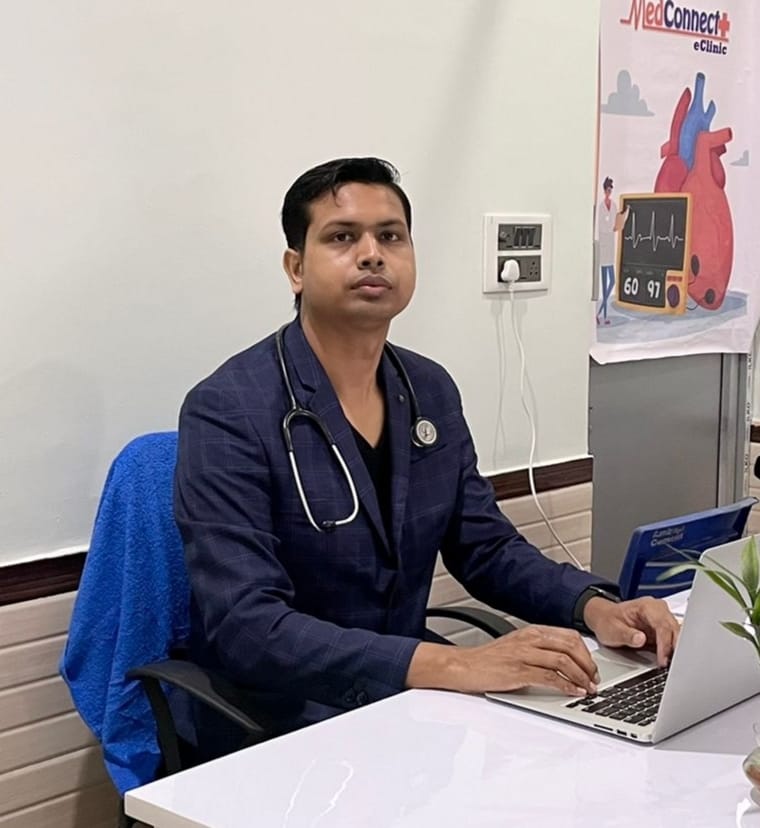
Consult Dr Debabrata Sarkar
M.B.B.S. (W.B.U.H.S.)
Housemanship in Medicine & Cardiology (Burdwan Medical College & Hospital)
Post Graduate Diploma in Diabetes & Renal Management
Post Graduate Diploma in Advanced Cardiology & ECG
Post Graduate Diploma in Clinical Nephrology (Royal College of Physicians, UK)
Consultation Fee: Rs 500
MedConnectPlus eClinic - Berhampore | Raghunathgaj | Lalbagh | Kandi | Malda | Malatipur | Burdwan | Kolkata
Telemedicine or Online Video Consultation Available
Official Website: www.drdsarkar.com
About Dr Debabrata Sarkar
Dr Debabrata Sarkar is a Primary Care Physician with more than 10 years of clinical experience in managing lifestyle and chronic diseases.
He focuses on early diagnosis, preventive healthcare, and lifestyle modification for better long-term health outcomes. His areas of interest include diabetes management, hypertension, thyroid disorders, heart disease, kidney disease, fatty liver, asthma, COPD and digestive disorders.
Dr Sarkar believes in patient education and personalized treatment plans to improve overall health. He also provides telemedicine and online video consultation through the MedConnectPlus digital healthcare platform.
Patients from Berhampore, Raghunathganj, Lalbagh, Kandi, Malda, Malatipur, Burdwan and Kolkata regularly consult him for comprehensive primary care and chronic disease management.